The Great Work
- kjoannerixon
- 3 days ago
- 2 min read
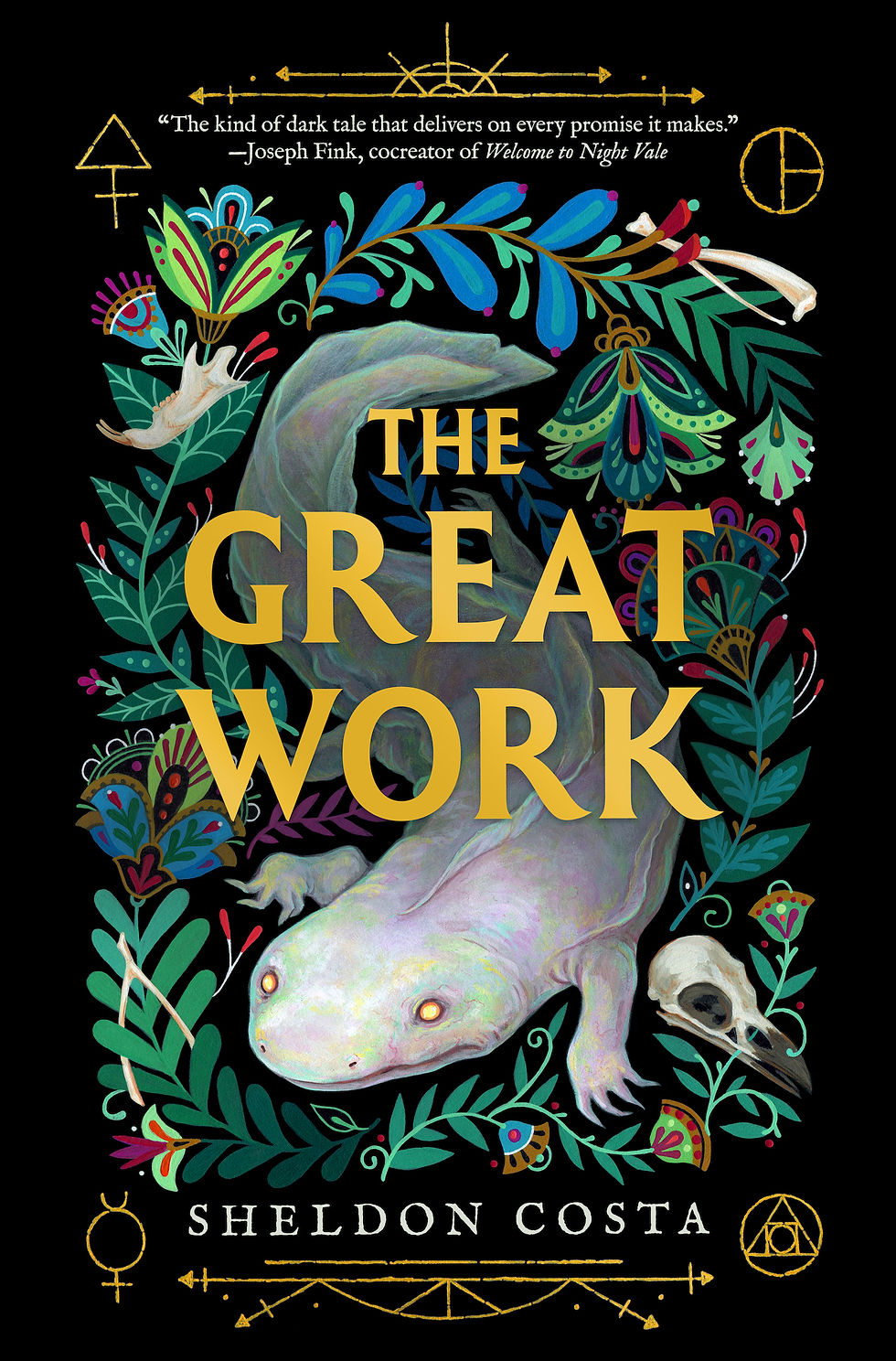
You can't bring the dead back to life. This is a thing that you know is true, and yet when someone, or something, you love dearly dies, what can you do but hope that this time--this time--somehow--
There's something about The Great Work that feels deeply trans to me, in spite of being written by a cis man (I think? probably?) and not having a single trans character. I mean this in the most complementary way, although I don't know that I can actually describe why it feels trans or what I mean by that. It's something to do with an understanding of the structure of the universe that comes from suffering and change and having experiences far outside the norm. And also something to do with understanding familial rejection and making one's own precious family from the dregs of the earth. There's something very Richard Siken about it: "Imagine the world is made out of love. Now imagine that it isn't."
Gentle, the protagonist, is an addict in a way that I found deeply plausible. Everyone in this story is... dislocated, not in their right place, not in their right mind. Not at home. Even the salamander. Which is something that, ironically, made this book feel like it was set in the right place and time. Turn of the 20th century Olympic peninsula--as far from the sight of God as you can get in those days.
There are one or two details in the book that don't quite feel authentically peninsular, e.g. Gentle at one point refers to manzanita bushes, which aren't common in the Olympic rain forest, since they're adapted for the drier north California coast. I think the author was probably thinking of ninebark or madrona, but this is obviously a detail that even a PNW native could mistake, depending on who taught them to identify native plants here. The geography at points gets confusing; Gentle et al keep going on deeper into the mountains past the point at which I expected them to run out of mountain and hit the ocean again. But on a deeper level, The Great Work feels right to me. It feels like something from my culture, from the Pacific Northwest, from the gray damp unexplored depths of prehistory, from a land it is not possible to understand.
I loved this book. It was so readable and so brutal and so insightful. The world is ending. We cannot stop it. Still, we pull each other out of the sea when we're drowning.


Comments